
Cricket is more than a sport in India—it is a dream for millions of young players. Every year, thousands of cricketers participate in cricket trials in India to showcase their talent and take the next step toward professional cricket. Whether you are a batsman, bowler, wicketkeeper, or all-rounder, the right cricket trial can open doors to state-level, national-level, and league cricket opportunities. At GHC India, players receive opportunities to participate in organized cricket trials, demonstrate their skills before experienced selectors, and gain exposure to competitive cricket environments. Cricket trials continue to be one of the most important routes for aspiring cricketers aiming to build a successful career in the game.
What Are Cricket Trials?
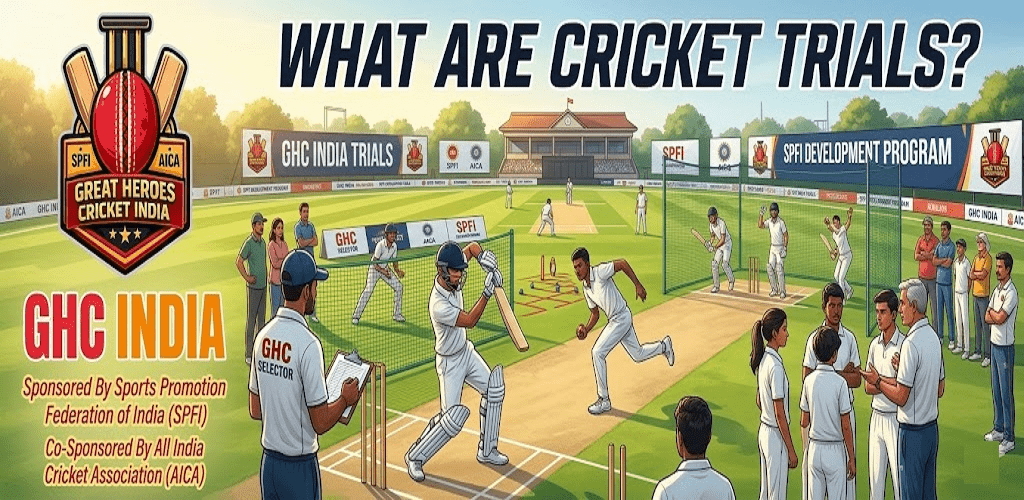
Cricket trials are structured player evaluation programs where selectors assess participants based on their overall cricketing abilities. During these trials, players perform various batting, bowling, fielding, fitness, and match-awareness activities.
The primary purpose of cricket selection trials is to identify talented players who have the potential to compete at higher levels. Many cricket academies, clubs, leagues, and organizations conduct trials regularly to discover emerging talent across India.
Why Cricket Trials in India Are Important
Participating in cricket trials offers several advantages for players:
Exposure to Selectors
Trials provide a platform where players can perform in front of experienced coaches and selectors who evaluate talent professionally.
Competitive Experience
Players learn how to handle pressure situations, improve decision-making, and gain valuable match experience.
Career Opportunities
Successful performances in trials can lead to opportunities in:
- Cricket academies
- State-level tournaments
- Club cricket
- Franchise leagues
- Professional cricket pathways
Skill Development
Even if a player is not selected immediately, trial participation helps identify strengths and areas for improvement.
Types of Cricket Trials in India
Open Cricket Trials
Open trials allow any eligible player to register and participate regardless of previous experience.
Academy Trials
Cricket academies conduct trials to select players for coaching programs and long-term development.
State-Level Trials
State associations organize trials to identify players for district and state cricket competitions.
League and Tournament Trials
Many T20 leagues and cricket tournaments conduct trials to recruit talented players for upcoming seasons.
Cricket Trial Selection Criteria
Selectors generally evaluate players on multiple factors rather than focusing on a single performance.
Batting Assessment
Selectors observe:
- Batting technique
- Shot selection
- Timing
- Footwork
- Strike rotation
- Match temperament
Bowling Assessment
Bowlers are assessed on:
- Line and length
- Accuracy
- Pace
- Swing and seam movement
- Spin variations
- Consistency
Fielding Assessment
Fielding tests usually include:
- Catching ability
- Throwing accuracy
- Agility
- Reflexes
- Ground fielding skills
Fitness Evaluation
Modern cricket demands excellent fitness. Players may be assessed on:
- Speed
- Endurance
- Strength
- Flexibility
- Athleticism
How to Register for Cricket Trials
The registration process is generally straightforward.
Step 1: Complete Registration
Fill out the cricket trial registration form with accurate personal and playing details.
Step 2: Submit Required Documents
Players may need:
- Age proof
- Identity proof
- Passport-size photograph
Step 3: Receive Trial Information
After registration, participants receive updates regarding venue, reporting time, and trial guidelines.
Step 4: Attend the Trial
Arrive early with complete cricket equipment and necessary documents.
How to Prepare for Cricket Trials
Practice Regularly
Focus on improving batting, bowling, and fielding skills consistently.
Improve Fitness
A fit player often performs better during trial sessions and leaves a stronger impression on selectors.
Play Competitive Matches
Regular match exposure helps players develop confidence and game awareness.
Stay Disciplined
Professional attitude, punctuality, and positive body language can significantly influence selectors.
Build Mental Strength
Handling pressure effectively is one of the most important qualities selectors look for in aspiring cricketers.
Common Mistakes Players Make During Trials
Many talented players miss opportunities because of avoidable mistakes.
Lack of Preparation
Poor preparation often leads to inconsistent performances.
Over-Aggressive Play
Trying to impress selectors with risky shots or unnecessary aggression can backfire.
Ignoring Fitness
Cricket is increasingly fitness-oriented, and poor fitness can reduce selection chances.
Negative Attitude
Selectors notice behavior, discipline, and sportsmanship as much as cricketing skills.
Losing Confidence
One mistake does not define the entire trial. Players should remain confident throughout the assessment.
Career Opportunities After Cricket Trials
A successful trial performance can help players access numerous cricket opportunities.
Potential pathways include:
- District Cricket
- State Cricket
- Academy Contracts
- Club Cricket
- T20 Leagues
- National-Level Competitions
- Professional Cricket Development Programs
Many modern cricket organizations are creating structured pathways that allow talented players to progress from trials to competitive tournaments and advanced coaching programs.
Why Choose GHC India Cricket Trials?
GHC India aims to provide aspiring cricketers with a professional platform to showcase their abilities and gain valuable exposure. Through organized cricket trials, players receive opportunities to perform, improve, and pursue their cricketing ambitions.
Benefits include:
- Transparent selection process
- Professional evaluation
- Multiple cricket opportunities
- Exposure to experienced selectors
- Structured player development
- Competitive cricket environment
For players dreaming of making a mark in Indian cricket, participating in GHC India cricket trials can be an important step toward achieving their goals.

Leave a Reply